01Begin with the product and grade
State the full product name, concentration or fertilizer grade, and the specification to be quoted. Packaging discussions should follow that identity. A format listed for one material should not be assumed suitable or available for another.
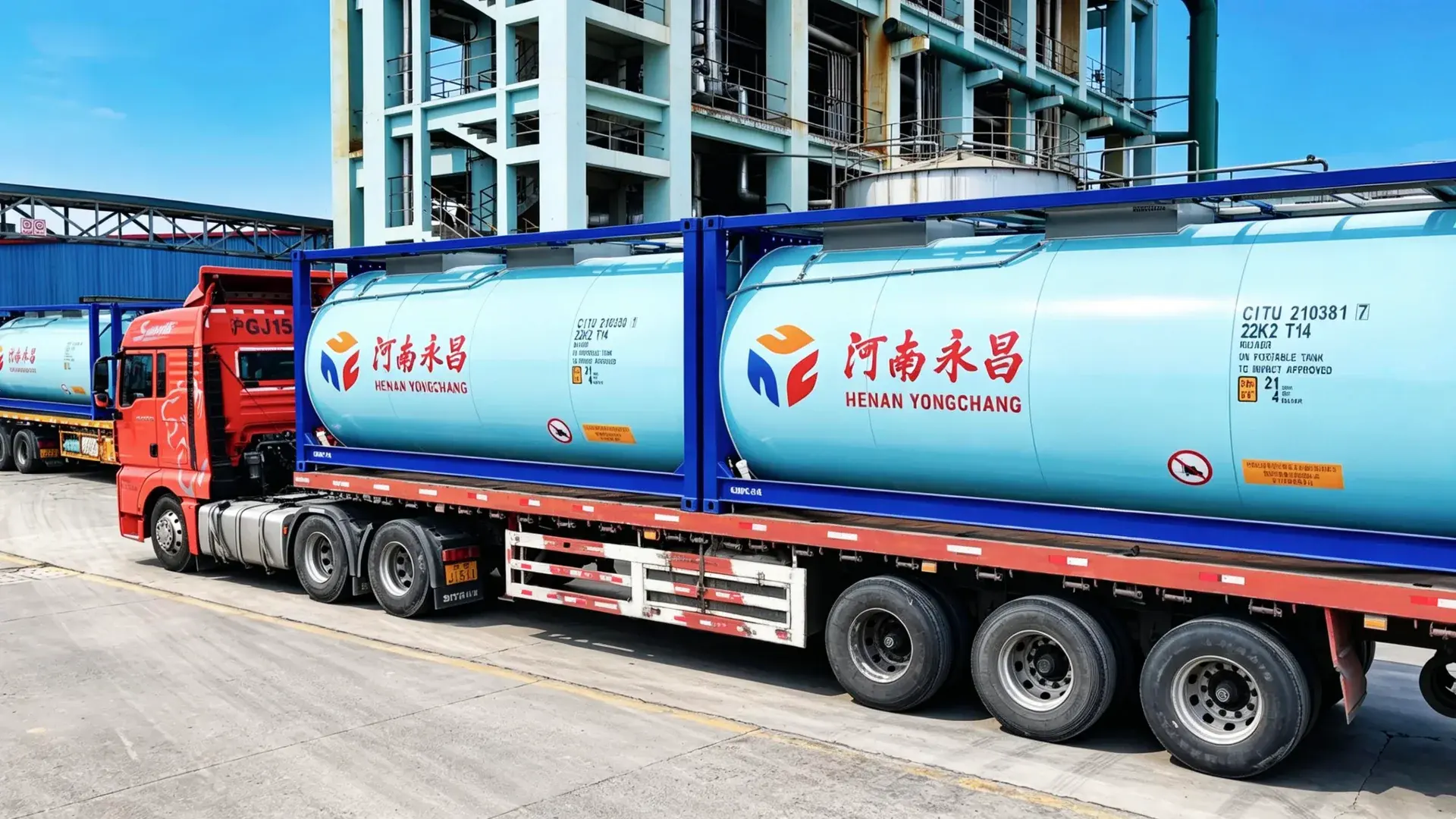
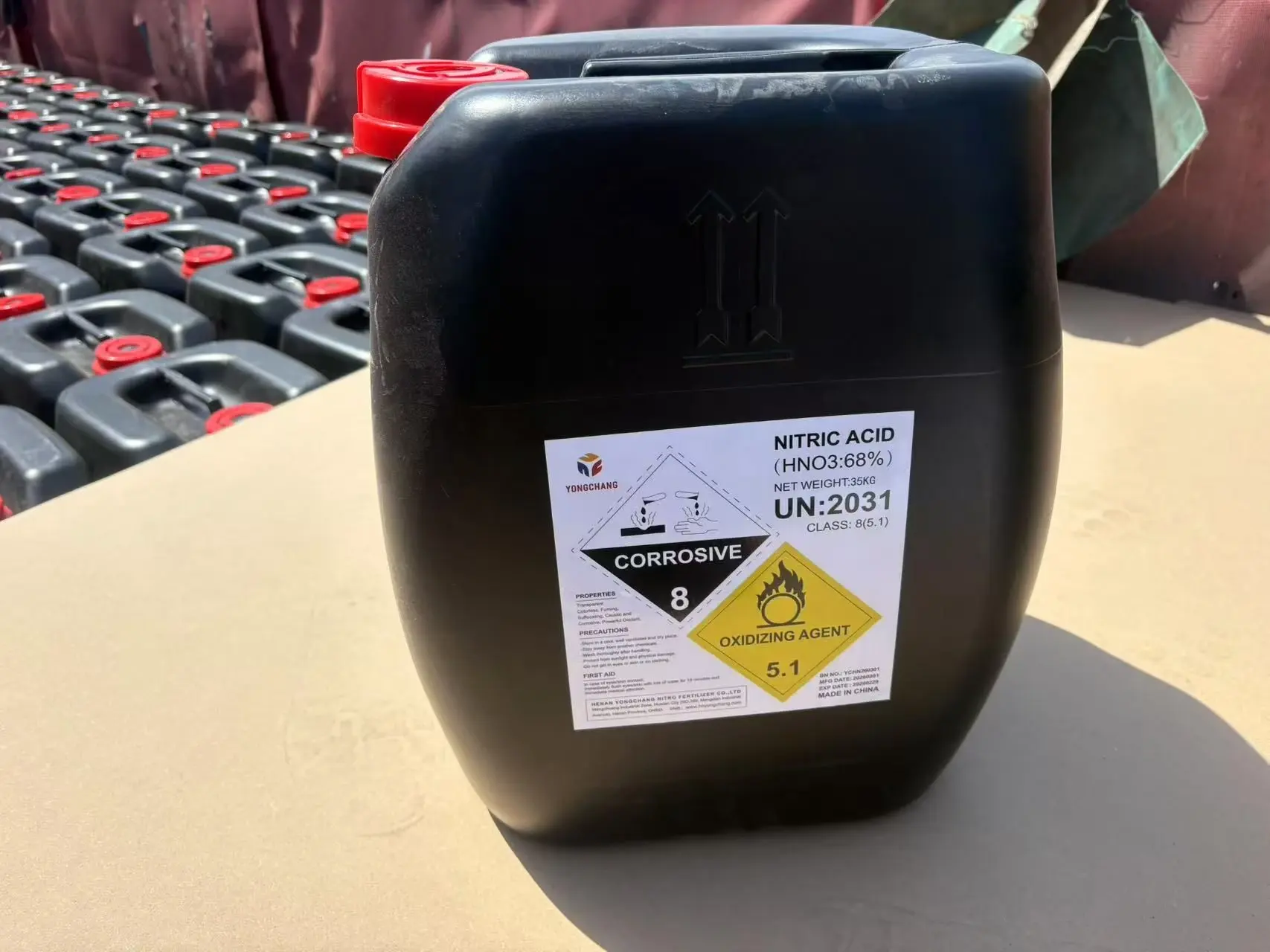
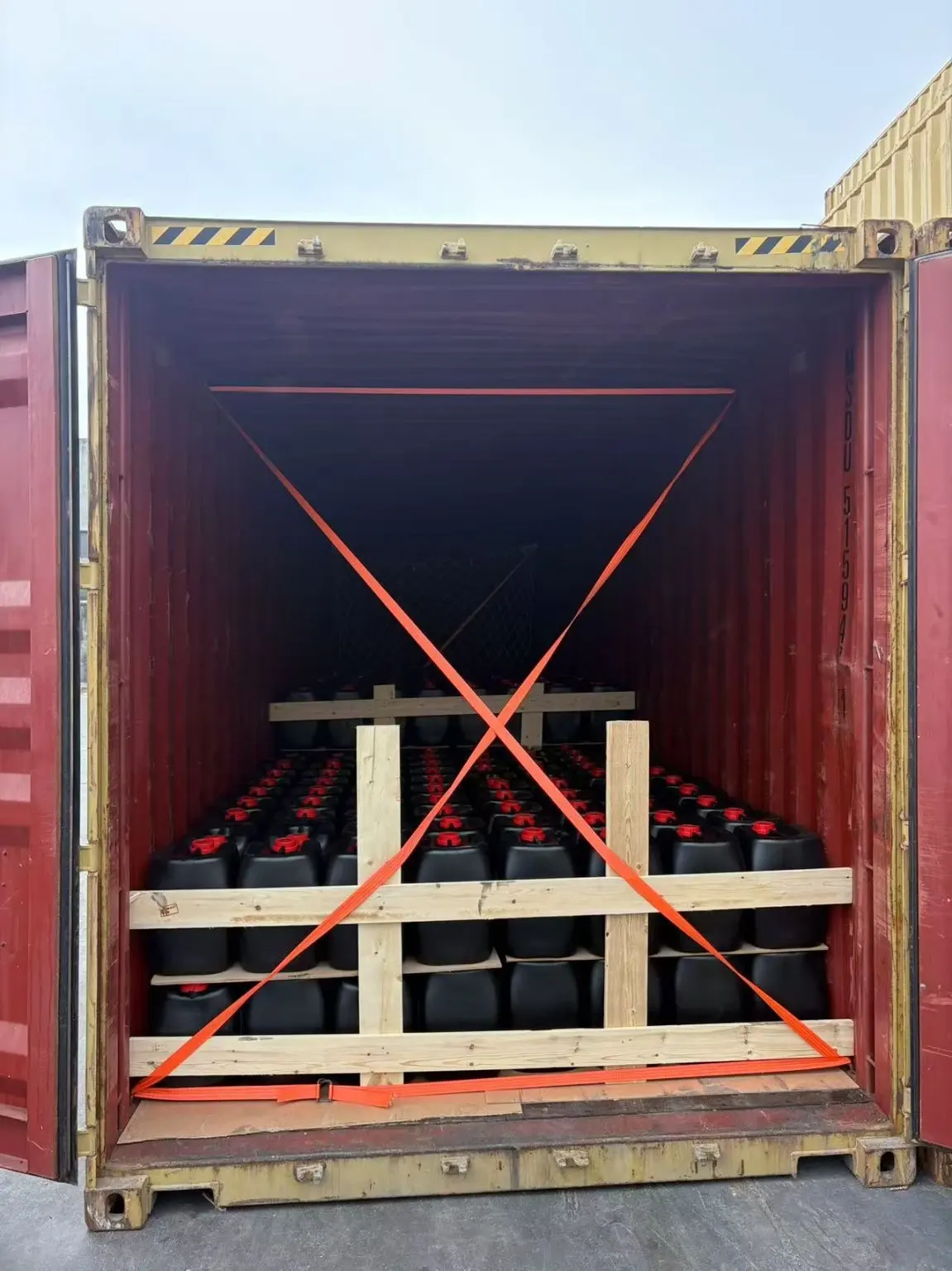
Yongchang’s current catalogue lists ISO tanks and IBCs for UAN, several liquid-packaging formats for nitric acid, and grade-specific bag sizes for fertilizer formulations. Ask for the proposed package type, material, nominal capacity, net fill, number of units and pallet arrangement where relevant.
If you are comparing suppliers, use the same packing description in each request. For example, a quotation for bagged product should identify the net mass per bag and total bag count. A quotation for an IBC shipment should distinguish the container’s nominal capacity from the agreed quantity of product inside it.
For a product-specific brief, use the UAN container buying guide or the 68% nitric acid ordering guide.
02Ask for the shipment’s net product quantity
Yongchang’s stated minimum order is one FCL, or full container load. The net loading quantity is confirmed for the product, grade, packaging, container and route. Use that confirmed net quantity for purchasing and nutrient calculations.
Ask the logistics team to distinguish net product mass, packing materials and equipment tare in the shipment proposal. For packed containers covered by SOLAS, IMO identifies verified gross mass as a condition for loading onto a ship. Confirm who will provide the shipment’s weight information and when it is needed.
Do not reuse a maximum payload quoted for nitric acid as a UAN loading figure. Even when the outer container size is the same, the package arrangement, product characteristics and transport constraints may be different.
03Describe both the destination and the unloading site
Provide the destination country, port and final receiving location where relevant. Yongchang lists Qingdao and Lianyungang as departure-port options; the proposed port is confirmed against the product, equipment availability and sailing schedule.
Explain receiving restrictions before the shipment is booked. These may include appointment windows, access limits, unloading equipment, available storage capacity or the ability to handle palletized units. For liquid deliveries, have the responsible personnel confirm the receiving and transfer arrangement using the product documents.
The Yongchang shipping and logistics page lists the current port options and the information needed to review a shipment.
- Destination country, port and named delivery point
- Receiving-site access and appointment requirements
- Unloading method, equipment and available storage
- Importer or broker contact for destination-document review
Sources: [1]
04Make the commercial scope comparable
Identify the agreed delivery rule, named place or port and edition in the offer. ICC explains that Incoterms® 2020 allocates costs, risks and obligations between buyer and seller. Ask your commercial team to check that the quoted rule matches the planned transaction and transport arrangement.
Request an itemized explanation of included and excluded charges. Check product packing, inland transport, port charges and ocean freight, then identify any destination handling, customs, tax, equipment-return or waiting charges that remain outside the price.
Separate product readiness, factory dispatch, port handover and estimated arrival. A dispatch estimate is not an arrival promise. Agree how changes in readiness or sailing schedules will be communicated and which date matters for your receiving plan.
05Close the loop before dispatch
Agree the document list with the supplier and your importer or broker. Depending on the product and transaction, the review may include the commercial invoice, packing list, transport document, product specification, COA, SDS and any shipment-specific declarations. Do not assume that a general document list establishes the requirements for every destination.
Before dispatch, compare the final packing and quantity details with the order confirmation. Request identifiers or packing photographs where useful for your receiving procedure. Keep the agreed specification and shipment records together so the receiving team can check the delivered material against the same information used to place the order.
The fertilizer COA reading guide explains how to connect reported results with the agreed specification and batch identity.
Sources: [1]
Sources & product documents
- Yongchang — Shipping & logistics
One FCL minimum order, port options and shipment-specific loading arrangements.
- Yongchang — UAN product specifications
Current catalogue declarations and grade-specific product pages.
- Yongchang — 68% nitric acid and product documents
Nominal concentration and the corresponding document samples.
- Yongchang — NPK fertilizer catalogue
Current formulations, product forms and grade-specific packaging.
- ICC — Incoterms® 2020 (opens in a new tab)
Official overview of the allocation of costs, risks and obligations.
- IMO — Safe transport of containers (opens in a new tab)
Verified gross mass requirements for packed containers under SOLAS.