01Confirm what N, P and K mean on the label
The grade convention used in Yongchang’s formulation catalogue is N–P₂O₅–K₂O. Michigan’s agriculture department describes the same convention: total nitrogen, available phosphate and soluble potash, expressed as percentages by weight. Phosphate and potash values on this basis should not be read as elemental phosphorus and potassium percentages.
Ask for the guaranteed analysis and label intended for your destination market. Use the same nutrient-expression basis across your purchase specification, supplier quotation and laboratory report. The label rules in an overseas reference are useful background, but your importer must check the requirements that apply in the receiving market.
02Distinguish NPK, NK and nitrogen-only declarations
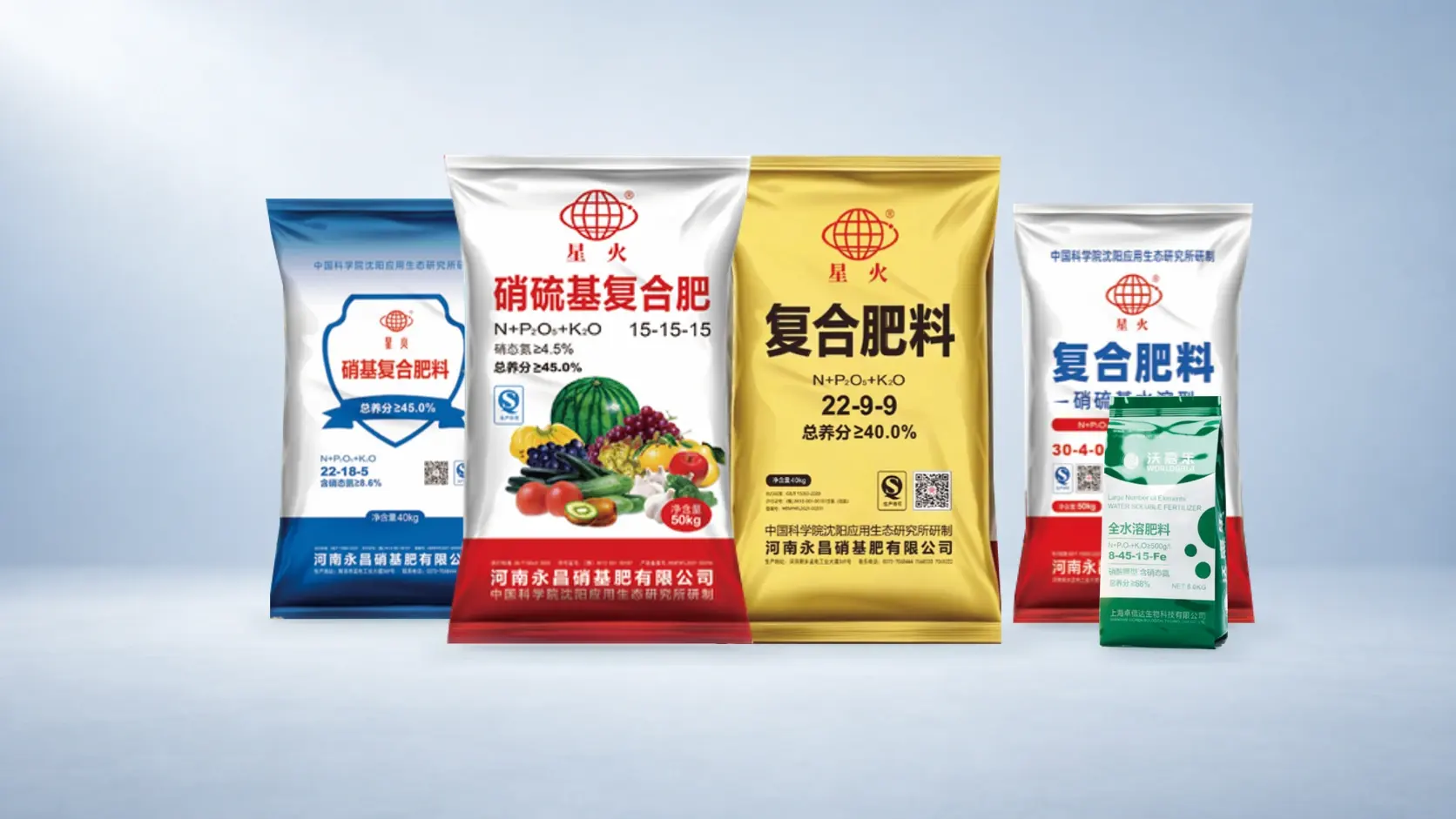
These examples come from the current Yongchang catalogue. They show why a product listed within a fertilizer range is not necessarily a source of all three primary nutrients. Read a zero as no declared contribution on that part of the grade, rather than assuming the product provides a complete nutrient program.
The bag sizes below are grade-specific catalogue options. Confirm current packing and order quantities in the quotation; a bag size is not the minimum order. The listed grade describes the formulation, while the supplied batch should be assessed against its agreed specification and analysis documents.
Compare the product details for 15-15-15 fertilizer and 28-0-8 fertilizer before selecting a formulation and bag size.
| Catalogue grade | Nutrient declaration | Listed bag size |
|---|---|---|
| 15-15-15 | 15% N · 15% P₂O₅ · 15% K₂O | 50 kg |
| 28-0-8 | 28% N · 0% P₂O₅ · 8% K₂O | 40 kg |
| 26-0-0 | 26% N · 0% P₂O₅ · 0% K₂O | 50 kg |
28-0-8 is an NK declaration. 26-0-0 declares nitrogen without phosphate or potash; it is not a complete NPK fertilizer.
Sources: [1]
03Calculate what the proposed quantity contributes
Multiply the product’s net mass by each declared nutrient fraction. On a nominal 15-15-15 basis, a 50 kg bag represents 7.5 kg N, 7.5 kg P₂O₅ and 7.5 kg K₂O. These are calculated quantities on the declaration basis, not a batch test or a recommended application amount.
For comparison, one tonne of nominal 28-0-8 represents 280 kg N and 80 kg K₂O, with no declared P₂O₅. If your nutrient plan also requires phosphate, that requirement remains to be addressed. A lower product price cannot be judged fairly without considering which nutrient quantities the offer actually supplies.
When two formulas have the same ratio but different percentages, recalculate product quantities. Also check the other properties and costs that affect use; equal ratios do not establish interchangeable products.
04Review the properties beyond the grade numbers
Ask whether the offered material is a granular soil-applied formulation or a product specified for dissolution. Do not assume that a fertilizer with an NPK grade is suitable for an irrigation system or for mixing with another material. Product form, water quality, the intended preparation and equipment requirements need a separate review.
Where relevant to your purchase, request the declared nitrogen forms, secondary nutrients, chloride information and physical-quality requirements. If sulphur, iron or another nutrient is part of the offer, ask for its own declaration and reporting basis. The three-number grade alone does not establish these additional properties.
- Full nutrient declaration and nitrogen forms
- Granular or water-soluble product form
- Required physical and chemical quality limits
- Any additional nutrient or chloride requirements
- Suitability review for the intended application equipment
Sources: [1]
05Tie the formula to one approved specification
Share the crop and nutrient plan with your agronomist, and use the resulting requirement to prepare the purchasing brief. Avoid choosing a balanced formula only because its three numbers match. Existing soil nutrients and other planned inputs may change which formulation is appropriate.
In the order, identify the full grade, product form, agreed quality limits, net quantity, bag size, destination and required documents. Request the COA for the supplied material and check it against that specification. If a catalogue description, label and report differ, resolve the difference before relying on them as one specification.
Use the fertilizer COA checklist for the analysis review and the packaging and delivery guide for the shipment brief.
Sources & product documents
- Yongchang — NPK fertilizer catalogue
Current formulations, product forms and grade-specific packaging.
- Michigan Department of Agriculture — Fertilizer label and grade definitions (opens in a new tab)
Reference for the N–P₂O₅–K₂O convention; Michigan rules are not presented as worldwide labeling requirements.
- Yongchang — Factory & quality
Product inspection items and the distinction between company systems and product testing.